


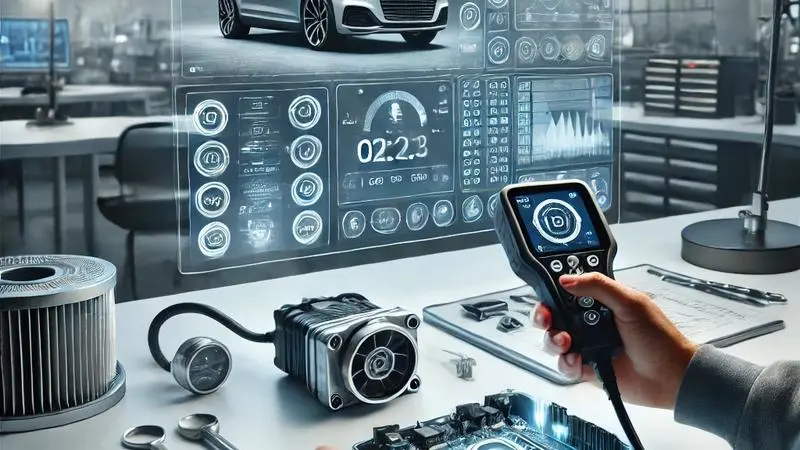
We are hearing more and more often about workshops that charge costs of for replacing a defective control unit. 3,000 to 4,000 euros Calculating this is not only expensive, but in many cases also unnecessary. Instead of directly replacing the control unit, we recommend that you first check the Workshop error log to request this and forward it to us.
The control unit can often be damaged by a professional repair or the use of a Replacement device They can be repaired – and at a fraction of the cost. With our expertise and state-of-the-art technology, we will find the best and most cost-effective solution for you.
To do this, you should understand how to recognize a defective control unit. Let's start with the basics:
What is a control unit and what are its functions?
Modern vehicles are inconceivable without electronic control units (ECUs). They are the heart of a car's electronics, monitoring, controlling, and adjusting all essential functions. But what exactly is an ECU, and how does it work?
Overview: Control unit as a "mini-computer" in the vehicle
A control unit can be thought of as a small computer that coordinates the various components of the vehicle. It collects data from sensors, processes it, and controls the corresponding actuators to perform specific functions. For example, the control unit ensures that the engine runs efficiently, the brakes work safely, and the electronics, such as power windows and lights, function flawlessly.
Each control unit is specialized for a specific area of the vehicle and ensures that all processes are optimally coordinated. Modern cars can have up to 100 control units installed, which communicate with each other via a so-called bus system.
Typical control units and their functions
Engine control unit (ECU):
The engine control unit (ECU) is one of the most important control units in the vehicle. It monitors and controls all engine functions, such as:
- Ignition and fuel injection.
- Air-fuel mixture.
- Control of exhaust emissions.
A fault in this control unit can cause the engine to not start, to run roughly, or to consume more fuel.
ABS control unit:
The control unit for the anti-lock braking system (ABS) prevents the wheels from locking up during hard braking. It collects data from the wheel speed sensors and regulates the brake pressure. A defective ABS control unit can significantly impair braking performance and therefore driving safety.
Transmission control unit:
This control unit is responsible for regulating the automatic transmission. It ensures that the gears are shifted optimally depending on speed and load conditions. Symptoms of a defect can include jerking during shifting or delayed responses.
Instrument cluster:
The instrument cluster displays all important vehicle data to the driver, such as speed, engine speed, fuel level, and mileage. It is central to the communication between the vehicle and the driver.
Typical symptoms of a defect:
- Failure of displays such as speed or fuel level.
- Flickering or continuously lit indicator lights.
- Pixel defects in the display or loss of sound during warning signals.
A defective instrument cluster can significantly impair driver information and therefore road safety.
Airbag control unit:
The airbag control unit is responsible for controlling the airbags and seatbelt pretensioners. It receives data from crash sensors and decides whether the airbags should be deployed.
Symptoms of a defect:
- Airbag warning light remains illuminated.
- Lack of communication with the airbag system.
- Stored crash data that is blocking the system.
A defective airbag control unit can prevent the airbags from deploying in an emergency – a significant safety risk.
Functions: Monitoring, control and adjustment
The main task of all control units is to ensure the efficiency and safety of the vehicle. This is achieved through:
- Surveillance: Continuous monitoring of all relevant vehicle components such as sensors and actuators.
- Steering: Automatic adjustment of parameters, e.g. fuel injection or brake pressure, in real time.
- Adjustment: Dynamic response to changing conditions, such as regulating the engine speed in traffic jams or activating brake force distribution during emergency braking.
A control unit is therefore not just a passive component, but an active aid that guarantees your driving safety and driving comfort.
Symptoms: How can I recognize a defective control unit?
A faulty control unit can manifest itself in various ways. Since control units are responsible for numerous functions in the vehicle, the symptoms can vary greatly depending on the affected unit. From illuminated warning lights to serious engine problems, there are many signs that can indicate a defect.
Common signs of a defective control unit
Warning lights in the cockpit
- One of the most common warning signals is the illumination of warning lights such as the engine warning light (MIL).
- This can appear permanently or sporadically and indicates a problem with the engine control unit or other electronic components.
Rough or jerky engine running
- If the engine stutters, runs unevenly or, in the worst case, stalls, this may indicate a defective engine control unit.
- Often the control unit does not correctly recognize the signals from the sensors or sends incorrect commands to the actuators.
Starting problems
- Another common symptom is that the engine does not start or only starts sporadically.
- Error codes such as "P1640 - Control unit defective" are typical indicators.
Reduced engine power (limp mode)
- A faulty control unit can put the engine into so-called emergency mode.
- The engine's power is drastically reduced to prevent further damage. The driver's ability to continue driving is severely limited.
Increased fuel consumption
- A defective engine control unit can no longer optimally control the fuel injection, leading to increased fuel consumption.
Electronic malfunctions
- Symptoms such as malfunctioning power windows, lighting problems, or a complete failure of the central locking system can indicate a defective on-board power supply control unit.
Jerking or delay when shifting gears
- Problems with gear changes or a delayed response from the transmission often indicate a faulty transmission control unit.
What happens if a control unit is defective?
A faulty control unit can impair the functionality of the entire vehicle. In the worst case, the vehicle may no longer start or drive. Safety systems such as ABS or airbags could also fail, significantly increasing the risk of an accident.
Answers to frequently asked questions
How can I tell if the control unit is broken?
- Symptoms such as warning lights, engine problems, or electrical failures are clear indicators. A professional diagnosis can confirm the defect.
Is it possible to drive with a broken control unit?
- In some cases, yes, but only to a limited extent. For example, in emergency mode. However, this should be avoided, as it can lead to consequential damage.
How does a defective transmission control unit manifest itself?
- Typical signs include jerking when shifting gears, delayed reactions, or remaining in one gear.
Causes: How can a control unit break down?
Control units are essential components of modern vehicles and are designed to be durable and reliable. Nevertheless, a variety of factors can lead to a malfunction. Some causes are due to external influences, while others are attributable to natural wear and tear.
Common causes of a defective control unit
Short circuits and overvoltage
- One of the main causes of control unit damage is short circuits in the wiring or components. These can be caused by defective cable insulation, damaged connectors, or external influences such as moisture.
- Overvoltages, for example caused by a defective alternator or improper jump-starting of the battery, can damage the sensitive electronics of the control unit.
Vibrations during driving
- Control units are subject to constant vibrations during driving, especially in older vehicles.
- Over time, these vibrations can loosen solder joints or internal connections, leading to a defect.
- Control units mounted near the engine or axles are particularly susceptible.
Temperature fluctuations and heat
- Control units operate within a wide temperature range, but extreme fluctuations or exposure to heat can put a strain on the electronics.
- In summer, when temperatures under the hood rise sharply, thermal damage can occur to the circuit boards.
- Control units located close to the engine or exhaust are particularly at risk.
Moisture and corrosion
- Moisture is one of the most common enemies of electronic components. It can penetrate the housing through damaged seals or condensation.
- Corrosion on connectors or conductor tracks often leads to a complete failure of the control unit.
- Vehicles that frequently travel in rainy regions or near bodies of water are particularly affected.
Wear and material fatigue
- Control units consist of numerous electronic components that can wear out over the years.
- Older vehicles are more susceptible to such damage, as material fatigue from years of operation is inevitable.
Real-world examples
- Defect caused by moisture: A vehicle electrical system control unit, located below the windshield, is flooded with water through a leaking seal. This leads to corrosion and a failure of the power windows and lights.
- Heat damage: An engine control unit (ECU) mounted directly on the cylinder head is damaged by constant exposure to heat. The conductive traces inside the unit deteriorate, leading to malfunctions.
- Vibrations: In older vehicles, the solder joints in the ABS control unit can loosen due to years of vibration. The result: error messages and reduced braking performance.
How can damage be avoided?
- Regular inspections: During inspections, also have the electronics and control units checked, especially on older vehicles.
- Careful handling: Avoid improperly jump-starting the battery, as overvoltages can severely damage the electronics.
- Protection from moisture: Ensure that seals and covers are intact to prevent water ingress.
There are many causes for a faulty control unit, but many problems can be avoided through regular maintenance and proper vehicle handling. However, if you notice signs of a defect, a Revonik specialist workshop can help quickly and reliably identify the damage and repair the fault.
What happens if the control unit is defective?
A faulty control unit can have serious consequences for your vehicle's functionality. Since control units are crucial for controlling and coordinating important vehicle components, failures can lead to reduced driving performance, safety risks, or even total vehicle breakdown.
Consequences for the vehicle in case of a defect
Limited functionality of important systems
- Ein defektes ABS-Steuergerät kann dazu führen, dass das Antiblockiersystem ausfällt. Das bedeutet, dass die Räder bei einer Vollbremsung blockieren können, was das Unfallrisiko erheblich erhöht.
- A damaged transmission control unit can lead to problems with gear changes, such as jerking or delayed shifting.
Reduced engine power (emergency running mode)
- Many modern vehicles have an emergency running mode that is activated when the engine control unit detects a serious fault.
- In diesem Modus wird die Motorleistung stark reduziert, um weitere Schäden zu vermeiden. Das Fahren ist zwar möglich, jedoch nur eingeschränkt und oft mit stark erhöhtem Kraftstoffverbrauch.
Complete vehicle breakdown
- Bei schwerwiegenden Defekten, insbesondere im Motorsteuergerät, kann das Fahrzeug komplett den Dienst verweigern. Der Motor startet entweder gar nicht oder schaltet sich während der Fahrt ab.
Increased emissions and high fuel consumption
- Ein fehlerhaftes Steuergerät kann die Einspritzung des Kraftstoffs oder die Abgasrückführung nicht mehr korrekt steuern. Dies führt nicht nur zu einem höheren Verbrauch, sondern auch zu schlechteren Abgaswerten, was bei einer HU/AU-Prüfung zum Problem werden kann.
Failure of comfort functions
- Ein defektes Bordnetzsteuergerät kann zu elektrischen Problemen führen, z. B. bei der Zentralverriegelung, den Fensterhebern oder der Beleuchtung. Diese Funktionen mögen nicht sicherheitskritisch sein, sind aber im Alltag essenziell.
Frequently Asked Questions
Is it possible to drive with a broken control unit?
- In einigen Fällen, wie im Notlaufmodus, ist das Fahren noch möglich. Allerdings wird die Motorleistung eingeschränkt, und sicherheitsrelevante Systeme wie ABS oder Airbags könnten nicht mehr funktionieren. Dies erhöht das Unfallrisiko erheblich und sollte unbedingt vermieden werden.
How can I tell if the control unit is broken?
- Typische Anzeichen sind aufleuchtende Kontrolllampen, Motorstörungen, erhöhte Emissionen oder elektrische Ausfälle. Für eine genaue Diagnose sollten Sie die Fehlercodes auslesen lassen.
What happens if the engine control unit fails?
- Der Motor läuft unrund, reagiert verzögert oder startet gar nicht mehr. In solchen Fällen ist eine Reparatur oder ein Austausch des Steuergeräts unumgänglich.
Why swift action is important
Ein defektes Steuergerät kann nicht nur weitere Schäden an anderen Fahrzeugkomponenten verursachen, sondern auch die Sicherheit erheblich beeinträchtigen. Zum Beispiel kann ein defektes ABS-Steuergerät zu gefährlichem Bremsverhalten führen, oder ein ausgefallenes Motorsteuergerät kann den Antrieb komplett lahmlegen.
Eine schnelle Diagnose und Reparatur ist daher entscheidend, um hohe Folgekosten und Sicherheitsrisiken zu vermeiden. Eine Fachwerkstatt wie Revonik kann den Schaden präzise diagnostizieren, reparieren oder das Steuergerät fachgerecht austauschen.
Reparatur oder Austausch: Welche Lösung ist sinnvoll?
Wenn ein Steuergerät defekt ist, stehen Fahrzeugbesitzern zwei Hauptoptionen zur Verfügung: Reparatur oder Austausch. Beide Ansätze haben ihre Vor- und Nachteile, und die Wahl hängt von verschiedenen Faktoren ab, wie dem Schweregrad des Defekts, dem Fahrzeugmodell und den Kosten. Hier erfahren Sie, welche Lösung in welcher Situation sinnvoll ist.
Reparatur: Die kostengünstige Lösung
In vielen Fällen kann ein defektes Steuergerät repariert werden, was oft deutlich günstiger ist als ein Austausch. Eine Reparatur ist sinnvoll, wenn:
- The defect is due to a clearly identifiable problem, such as a damaged conductor track or defective solder joints.
- The main functions of the control unit are intact and there is no irreparable damage.
Advantages of repair:
- Cost savings: A repair is usually cheaper and at least as reliable as a replacement device.
- Environmentally friendly: Repairs reduce electronic waste and are more sustainable.
- Time saving: Many repairs can be completed within a few hours or days.
When is a repair not worthwhile?
Wenn die Elektronik schwerwiegende Schäden aufweist, wie etwa durch Kurzschlüsse oder Überspannungen, kann eine Reparatur unwirtschaftlich sein. In solchen Fällen ist ein Austausch die bessere Wahl.
Austausch: Die zuverlässige Alternative
Replacing the control unit is necessary if:
- The damage is irreparable.
- The control unit does not function reliably after a repair.
- Spare parts are readily available and replacement can be carried out faster than a repair.
Exchange options:
New part:
- A new control unit offers maximum reliability and often comes with a warranty.
Replacement device (refurbished):
- A more cost-effective alternative to a new part.
- Reconditioned control units are tested and updated to the latest version.
Advantages of the exchange:
- Reliability: A new or refurbished control unit guarantees flawless operation.
- Speed: Replacing the part is often faster than a lengthy repair.
- Guarantee: Many providers offer a 12 to 24 month warranty on replacement devices.
Why DIY repairs are risky
Attempting to repair a control unit yourself may be tempting, but it carries significant risks:
- Technical complexity: Control units contain highly specialized electronics, the repair of which requires in-depth knowledge and special equipment.
- Follow-up costs: Incorrect repair attempts can cause further damage to the control unit or other vehicle components.
- Time required: Without the right diagnostic tools, troubleshooting can be very time-consuming, often without success.
Which solution is right for you?
- Repair: Ideal for clearly identifiable and limited damage, especially when costs need to be saved.
- Exchange: The best choice for serious defects or when fast results are needed.
Our experienced technicians will analyze the damage precisely and recommend the most sensible and cost-effective solution.
Why you are in the best hands at Revonik
Ein defektes Steuergerät erfordert Fachwissen, modernste Technik und einen vertrauenswürdigen Partner. Bei Revonik bieten wir Ihnen genau das – und noch mehr. Unsere langjährige Erfahrung, kombiniert mit einem hohen Maß an Präzision, macht uns zur besten Wahl, wenn es um die Reparatur oder den Austausch von Steuergeräten geht.
Unsere Expertise: Spezialisten für Steuergeräte
Revonik hat sich auf die Reparatur und den Austausch von Steuergeräten spezialisiert. Egal ob Motor-, ABS-, Airbag-, Getriebesteuergerät oder Kombiinstrument – wir kennen die Schwachstellen und wissen, wie wir diese zuverlässig beheben können. Unsere Techniker verfügen über fundiertes Wissen und modernste Prüftische, um stets auf dem neuesten Stand der Technik zu bleiben.
State-of-the-art diagnostic and repair technology
Mit unserer hochmodernen Ausstattung sind wir in der Lage, Fehler schnell und präzise zu diagnostizieren. Unsere Vorteile:
- Precise error analysis: We can identify the cause of the defect and intervene in a targeted manner.
- State-of-the-art testing equipment: These allow us to test control units under realistic conditions.
- Efficient repairs: By using the latest technologies, you save time and money.
Individual solutions for your requirements
Nicht jedes Steuergerät muss sofort ausgetauscht werden. Wir bewerten jeden Fall individuell und bieten Ihnen die beste Lösung:
Repair: Cost-effective and efficient – ideal for repairable damage.
Replacement devices: Reconditioned control units as a fast and inexpensive alternative.
Transparent pricing and warranty
Trust is important to us, and that's why we guarantee you absolute transparency regarding all costs.
- Fair prices: Repairs and replacement devices at significantly lower prices than new parts.
- Gewährleistung: You will receive an invoice for the repair work carried out 24-month warranty, so you can drive without worry.
Speed and reliability
Wir wissen, wie wichtig Ihr Fahrzeug für Sie ist. Deshalb bieten wir Ihnen:
- Fast processing: Most repairs are completed within 1-2 days.
- Minimum downtime: With our replacement devices, you can often use your vehicle again immediately.
Customer proximity and service
Our goal is to offer you the best service:
- Advice: We will provide you with comprehensive information about the possible solutions.
- Transparency: You always know what to expect – no hidden costs.
- Central location: Our office is easily accessible, and we also offer a mail-in service for control units.
Your advantages with Revonik at a glance:
- Specializing in all common control units.
- Fair prices and a 24-month warranty on the repair work.
- State-of-the-art diagnostic and repair technology.
- Fast processing and customer-oriented service.
Rely on quality and safety – trust Revonik.

